
Imagine You’re tired. You have work to finish, a workout to complete, or a long day ahead. You reach into the fridge and see two choices: a bottle of water or an energy drink.
One promises hydration. The other promises energy.
But what is actually happening inside your body after you drink them?
Energy drinks and water serve very different purposes. Water primarily helps your body maintain normal hydration and essential functions, while energy drinks can provide caffeine and, depending on the product, added sugar and other ingredients that may increase alertness. Understanding that difference can help you make a more informed choice instead of simply reaching for whichever drink looks more appealing.
1. Water: More Than Just Something That Quenches Your Thirst
Water may seem basic, but your body depends on it every day.
Your body uses water to help regulate temperature, protect tissues and joints, remove waste and maintain normal physical functions. When you don’t get enough fluid, dehydration can occur, potentially contributing to symptoms such as unclear thinking, mood changes, overheating and constipation.
This is why water is such a straightforward choice when you’re thirsty.
Imagine finishing a workout on a warm day. You’ve been sweating, your mouth feels dry and you’re reaching for something to drink. In that situation, the immediate need is often fluid. The NHS recommends drinking regularly throughout the day and notes that you may need additional fluids when you’re physically active, in a hot environment or unwell. It also identifies water as a healthy choice for hydration.
And here’s something important: you don’t necessarily need to force yourself to drink exactly the same amount every day. Fluid requirements vary depending on factors such as activity, environment and individual circumstances. The NHS suggests using thirst and urine colour as practical indicators, with pale-yellow urine generally indicating adequate hydration.
The takeaway?
Water doesn’t need flashy packaging or an energy-boosting claim. Its biggest advantage is simple: your body needs fluids to function normally.

2. Energy Drinks: Where Does the “Energy” Actually Come From?
Now for the more interesting question: if energy drinks give you energy, where does that energy come from?
For many energy drinks, the answer starts with caffeine.
Caffeine is a stimulant, meaning it can make you feel more awake and alert. This is one reason people reach for caffeinated drinks when they feel tired. However, feeling more alert isn’t the same thing as solving the reason you’re tired.
The NHS notes that caffeine can make you feel more awake, but it can also interfere with sleep. Its effects can last for several hours, which is why consuming caffeine later in the day may make it harder for some people to sleep.
Energy drinks can also contain significant amounts of added sugar, depending on the product. The CDC notes that energy drinks may contain large amounts of caffeine, added sugars and other stimulants.
That creates an important distinction:
Energy drink = potential alertness boost.
Water = hydration.
They aren’t doing exactly the same job.
There is also a common misconception that caffeine automatically means severe dehydration. Research has found that moderate caffeine consumption does not necessarily cause fluid loss greater than the amount consumed, particularly in people accustomed to caffeine.
So the story isn’t simply “energy drinks dehydrate you.”
The bigger question is what else comes with the drink?
If an energy drink contains lots of added sugar and caffeine, regularly consuming it can add calories and increase caffeine intake. The CDC also advises paying attention to added sugars and notes concerns surrounding energy drinks, particularly for young people.
And if you’re drinking one late at night because you’re exhausted, you could create a cycle: caffeine helps you feel awake temporarily, but disrupted sleep can contribute to tiredness the next day.
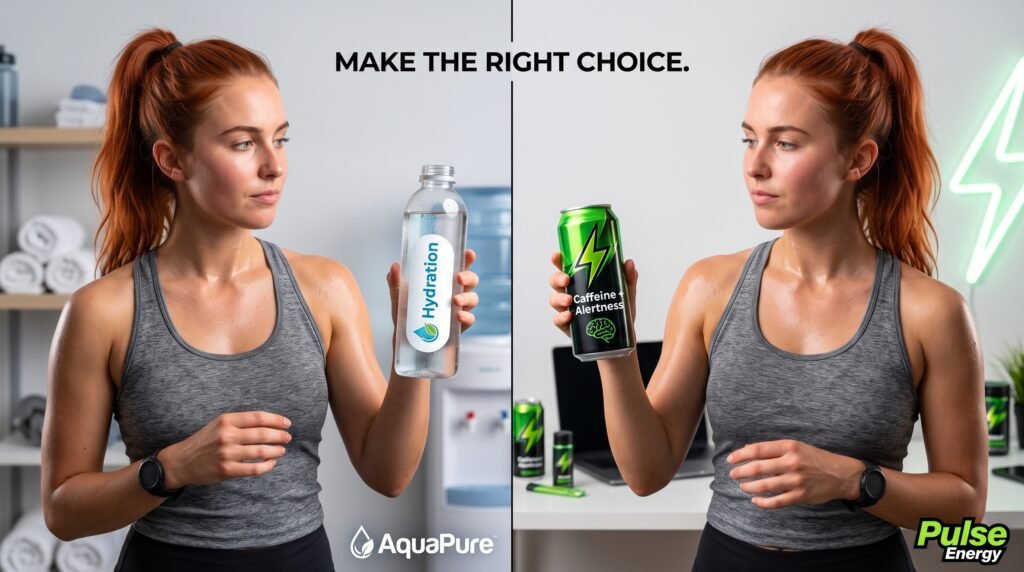
3. Energy Drinks vs Water: Which One Makes Sense for You?
The answer depends on why you’re reaching for the drink in the first place.
If you’re simply thirsty, water is an obvious option.
If you’re sitting at your desk late in the afternoon and struggling to stay awake, caffeine may make you feel more alert—but it’s worth considering how much caffeine you’ve already consumed and what time you’ll be going to bed.
If you’ve just completed a long workout, hydration becomes particularly important. For most everyday situations, water can be an effective way to replace fluids. During prolonged or demanding exercise, however, the ideal drink can depend on factors such as exercise duration, sweating, carbohydrate needs and environmental conditions. Research on carbohydrate-electrolyte drinks suggests they can sometimes provide advantages for dehydration after exercise-associated dehydration, although results vary depending on the situation.
Here’s a simple way to think about it:
| Situation | What to think about |
| You’re thirsty | Water is a simple hydration choice |
| You’re sitting at work | Consider whether you actually need caffeine |
| It’s close to bedtime | Caffeine may interfere with sleep |
| You’ve been exercising | Replace the fluids you’ve lost |
| You’re drinking energy drinks frequently | Check caffeine and added-sugar content |
| You’re in hot weather | Your fluid needs may increase |
The most useful question isn’t necessarily “Which drink is better?”
Instead, ask:
“What does my body actually need right now?”
If it needs fluids, water can provide them without added sugar or caffeine.
If you’re considering caffeine for alertness, look at the label and think about your total caffeine intake and the time of day. Different energy drinks can have very different formulations, so checking the nutrition and caffeine information matters.
Ultimately, an energy drink shouldn’t be confused with a magic source of energy. Caffeine can temporarily increase alertness, but it doesn’t replace sleep, a balanced diet or adequate hydration.
Water and energy drinks aren’t simply two versions of the same thing.
Water supports hydration. Energy drinks are formulated primarily to provide caffeine and, in many cases, added sugar and other ingredients intended to increase alertness or perceived energy.
That doesn’t mean every caffeinated drink automatically causes dehydration, nor does it mean every energy drink affects everyone in exactly the same way. The ingredients, amount consumed, timing and individual circumstances all matter.
The next time you open the fridge, pause for a second and ask yourself:
“Am I actually thirsty, or am I just tired?”
That small question could help you choose the drink that better matches what your body needs.
What do you usually reach for: water or an energy drink?
Share your choice in the comments and tell us why. If you found this article useful, share it with someone who regularly reaches for an energy drink when they’re tired—and check out our other health and fitness articles for more practical information.