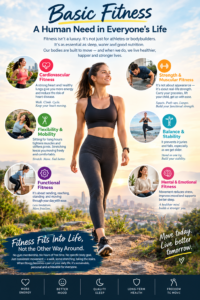
Fitness is often pictured as something reserved for athletes, bodybuilders, or people chasing a certain look. But in reality, fitness is not a luxury or a trend — it’s a basic human need, just like sleep, water, or good nutrition. Our bodies were built to move, and when we don’t give them that movement, we pay for it in the form of fatigue, stiffness, poor sleep, and long-term health problems. Understanding fitness as a daily necessity rather than a hobby changes how we approach it, and makes it something every person, regardless of age or lifestyle, can actually sustain.
Cardiovascular Fitness
At the core of physical health is a strong heart and healthy lungs. Activities like walking, climbing stairs, or cycling keep your cardiovascular system working efficiently, giving you more energy for daily tasks and reducing the risk of heart disease over time. You don’t need intense cardio sessions — consistent movement is what matters most.
Strength and Muscular Fitness
Strength isn’t about building visible muscle for appearance. It’s about being able to carry your groceries, lift your child, or get up off the floor without struggle. Body weight exercises like squats, push-ups, and lunges are enough to build the functional strength most people need for daily life.
Flexibility and Mobility
Sitting for long hours — at a desk, in a car, on a couch — tightens muscles and stiffens joints over time. Stretching and mobility work, even a few minutes a day, keep your body capable of moving freely and comfortably as you age.
Balance and Stability
Balance is one of the most overlooked types of fitness, yet it plays a critical role in preventing injuries and falls, especially as we get older. Simple exercises like standing on one leg or basic core work can strengthen the stability we rely on every day without realising it.
Functional Fitness
This ties everything together. Functional fitness is the ability to bend, reach, stand, and move through your day with ease. It’s less about performance and more about living without physical limitation — this is really what “basic fitness” is all about.
Mental and Emotional Fitness
Movement doesn’t just shape the body — it shapes the mind. Regular physical activity is proven to reduce stress, improve mood, and support better sleep. For many people, fitness becomes less about the body and more about mental clarity and emotional balance.
Fitness Fits Into Life, Not the Other Way Around
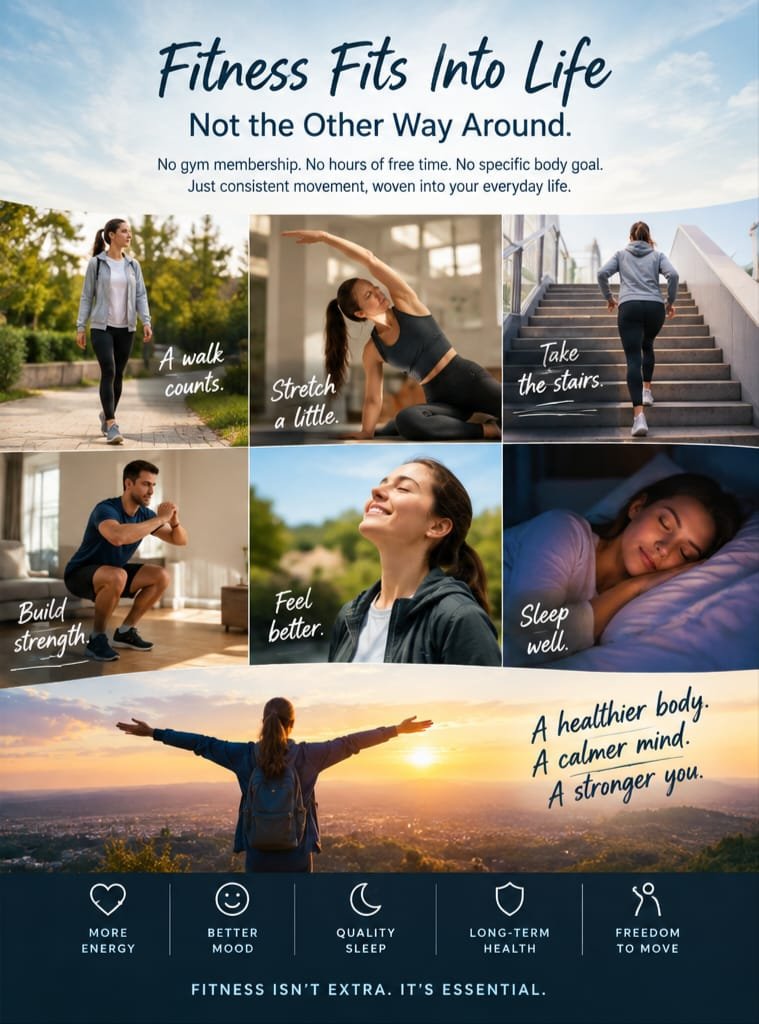
The biggest misconception about fitness is that it requires a gym membership, hours of free time, or a specific body goal. In truth, fitness is simply about consistent movement woven into daily life — a walk, some stretching, taking the stairs. When we see fitness as a basic need rather than an extreme pursuit, it becomes something sustainable, personal, and achievable for everyone.